2020. július 21., kedd

Henry VIII's. private life - History of sex, erotica, and pornography XV.


Henry VIII. (1491 - 1547) is famous for many things, such as scandals, wives doomed to death, militant thinking, and campaigns. And of course the most important thing: founding the Anglican Church! Henry foamed life, food, and women. He was a real renaissance man!
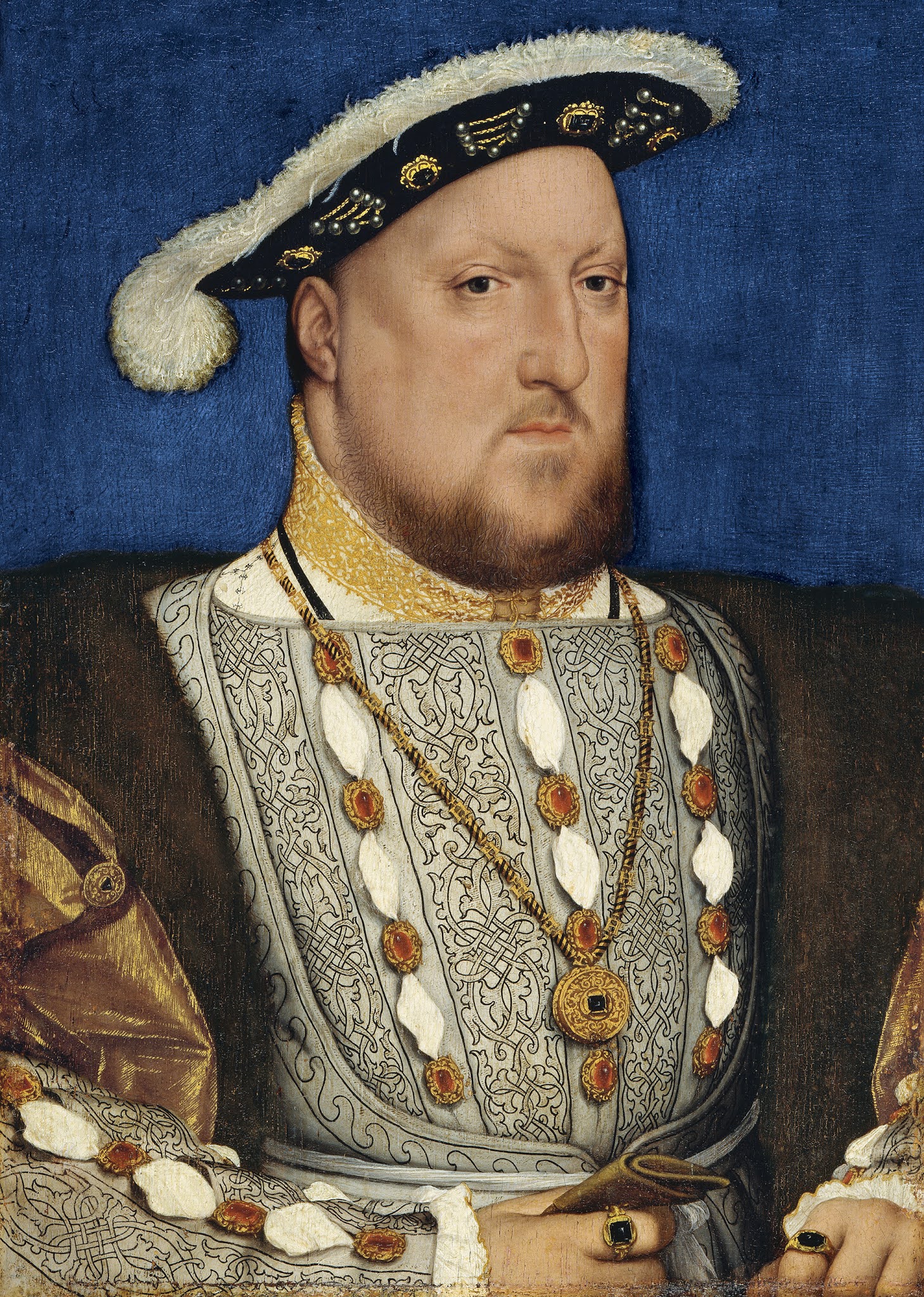
Henry VIII. of England
wikimedia.org

However, it is a massive misconception about Henry that he would have been such great sexual desires. He allegedly often could not satisfy the ladies! Nor is there any evidence that he was syphilis. Yet this would not have been surprising given the Middle Ages.
Let's take a look at the King's ladies.
Catherine of Aragon
His first wife was Catherine of Aragon, and this marriage began with love. And for 15 years, he seemed happy. But unfortunately, their children were all stillborn. There was one exception, Mary. However, no heir to the throne was born. And then Henry looked for a fertile lover.

Boleyn Anna
First, Mary Boleyn was the King's lover. We saw this in the film; 'The Other Boleyn Girl.' Mary Boleyn also gave birth to a child for the ruler. However, Henry soon got bored with the gentle Mary. And Anna Boleyn knew full well what she could do to seduce the King. She went to the very end. With the practices what she learned in the French court, Anna mesmerized the King. However, she did not allow sex. She told Henry that he had to marry her. The King then went crazy to take Anna to bed, and the result of this affair, that Henry VIII founded the Anglican Church. Finally, He married Anna Boleyn.

When Anna was crowned Queen in 1533, she was already six months pregnant and gave birth to the later Queen Elizabeth I. After her first successful pregnancy, Anna, unfortunately, had several miscarriages. Henry VIII. ended up the marriage because Anna was accused of incest and treason. However, many said it was just a conceptual lawsuit against her.
Jane Seymour
While 3 years of marriage with Anna three marriage, the King began courting Jane Seymour. Jane behaved virginally and quietly. Henry VIII. was married to her immediately after Anna was beheaded. The fragile new Queen soon gave birth to the expected boy, but shortly she died of cervical fever. The King was very worn out because, according to historical sources, he really loved this woman.

Anna of Cleves
Anna Cleves was the new wife. She lived with the King for only six months. She was an ugly woman, and the King did not want sex with her. But Anna is disgusted Henry VIII. too. The King called his wife as the "Flemish mare." Nevertheless, he sent him in peace and remained friends. The King even donated estates to her!

Catherine Howard
At the age of 16, he became the wife of the 49-year-old King. Henry VIII was so a fat, fussy, and short-tampered man. Catherine surrounded herself with many young men and made her lover a private secretary. This situation is perhaps more understandable if we know that from the age of 11 Catherine was regularly harassed by older men who walked into her room.

Catherine was the wife of the sick Henry VIII less a year. Because she was completely inexperienced and influential in life and politics, she quickly got into a man's net. Therefore, she was also convicted of adultery, so she became the second beheaded wife.

Catherine Parr
Catherine became the wife and faithful friend of an aging and increasingly ill King. She took care of Henry's wounds, but there was no sexual relationship between them. In her, the King found his soul mate. Catherine could even reunite the family. Henry VIII. readmitted his previously denied daughters to the throne. Besides her, the King was finally able to end his life in peace. After the death of Henry VIII, the Queen was able to retain her wealth, rank, and many estates. She organized Henry's funeral, and at the end of Henry VIII's power, she played a significant role in helping young Elizabeth to save adulthood.

Recent research suggests that Henry VIII had several ulcers from injuries. And they caused him terrible and constant pain. Probably that is why he became grumpy, suddenly angry, and cruel in his old age.
Read more about sex in the Tudor Age!

(All pictures are from wikipedia.org and gettyimages!)

2020. július 13., hétfő

History of Sex, Erotica, and Pornography XIV. Sex in the Tudor Age


After France, let's take a look at England now. The best known and greatest king of the Middle Ages was Henrik VIII. in England. Before we get into privacy, let's look at the rules of Tudor sex!

1. Sex is often forbidden
The church has set strict rules for when, where, and how people can have sex with each other. Thus, it was forbidden to have sex on Wednesdays, Fridays, Sundays, during Lent, Advent, Pentecost, before the major holidays when the woman was menstruating, in the last months before giving birth, for a month after giving birth, and while the mother was breastfeeding. Sex was forbidden for three days before sacrifice, during the day, naked, and in any way outside the missionary pose.
All sexual activity that was not for reproductive purposes was sodomy.
Jonathan Rhys-Meyers as Henry VIII. of England
in the "The Tudors"
wikimedia

2. Married only
The only sexual activity allowed by the contemporary church was the fulfillment of "marital duty." This approach means that sex's goals within marriage for childbearing.

3. It is mandatory to make a child (especially if you are king!)
For kings and queens, childbearing was a moral obligation. It also served the interests of the dynasty. The marriage was valid only if it was passed away. After the royal couple was married, there were, therefore, witnesses in the bedroom. They waited behind the curtain for the sounds of orgasm because that was the evidence.
wikipedia.org
4. Enjoy life ...!
Doctors were also involved in the issue of sexuality. It was believed that too little sex was not good for a person's health. Also, it can even endanger it. Doctors said that women and men produce a "seed" with which they can create new life. The balance of these is vital in the body. This theory meant that in order to have children, both parties had to breake out their seed, so they had to reach orgasm.

5. ... but don't overdo it!
The church forbade sex so much, among other things, because it feared it could entice people to sin. Many believed that sex made them angry with themselves. And an English bishop claimed that "the filthy desires of the flesh" were harmful to men.

6. Forget contraception!
The church condemned contraception. An exception was if the woman was expected to die in childbirth. The methods of contraception advocated by doctors were sometimes very bizarre. It's hard to imagine anyone taking them seriously. One of the contraceptive ointments, for example, consisted of the following ingredients: poppy, egg white, goose fat, honey, and "female milk."
A popular medical book claimed that an excellent method of contraception is to carry a weasel with severed testicles around her neck.

7. Break the rules!
In XVI. century people lived active sex lives. Adultery was forbidden, but it was widespread. The reason for this was that forced marriages occurred many times among the nobility and the royal family. For example, during Henrik VIII's wife lay pregnant with her first child, and the king courted the married Lady Anne Hastings. And the Spanish ambassador, who reported on the king's departure, blamed Catherine, not the ruler, for making the affair a word!

8. Enjoyment is an expectation
In the Tudor era, women were also expected to enjoy sex. There was also advice on this. It was thought that anyone who felt uncomfortable or unhappy during sex was not fertile. Mutual enjoyment was necessary to get pregnant. Women always had to be ready if their husbands wanted sex. However, it was also crucial for men for their partners to enjoy sex. This made a central question! You can only have a child if the woman also had an orgasm.
wikipedia
"The Tudors"

In summary, whatever the people did, they could only come out of it badly. Notwithstanding, the majority of medieval English thought that sex was worth the risk!

2020. június 22., hétfő

History of sex, erotica and pornography XIII. - Charles VIII. the sexual giant


Sex and marriage were nowhere easy for the kings. These were public affairs. The heir to the throne was a central issue at every royal house. And if a king ascended the throne as a child, he didn't know what to do on his wedding night. It was no different in France in the Middle Ages.
Charles VIII. of France
a flattering portrait
wikimedia.org

Charles VIII. of France, and his early years of and coronation
Pope Alexander VI. and Charles VIII. lived and ruled in the same period.  Charles VIII. lived and ruled in the XV century. He became ill a lot after his birth and spent most of his childhood in bed. He cried over romantic knight stories and loved to hear about the heroic deeds of Charles the Great. He was passionate about describing the Crusades. However, they didn't teach him, so he was almost analphabetic.
His appearance was also disadvantageous: he was a short and slightly distorted man, with a disproportionately large head, six toes, besides, he was speech impaired and often twitched convulsively.
He was thirteen when his father died, and he was crowned in Rheims. However, he ruled on his own only from the age of 21. After the coronation, everyone was shocked that the king showed signs of fabulous sex addiction. He was a sexual giant in terms of both the number of women and his performance. For a few years, he only chased the female staff of his palace, the maids and cooks. When he was 15, he threw himself at the court ladies and young countesses.
The marriage of Charles VIII. of France.
When the Bretons and French were at war for five years, during the wartime, the king was finally able to relive the stories he heard as a child. Beyond that, he was only interested in sex and fucked the peasant girls who were brought to him.  After five years, as requirements of peace was, that he Charles had to married with Anna from Brittany. Anna was 16 years old and did not want to be a wife of Charles VIII. It was not a miracle in terms of the king's appearance. The princess objected and cried on her wedding night. Soon, however, her opinion changed because the king impressed her with his sexual performance. The queen then insisted on daily sex. She fell in love with her husband on her wedding night. None of them knew about it, but behind the curtain, 6 people were hiding and took a note about what had happened on their wedding night. The detailed description can be found today in the Bibliotheque Nationale in Paris. According to the document, the queen was entirely satisfied. Anna soon gave birth to the boy's heir, Orlando, but the king soon tired of her. He preferred to have fun with various princesses.
Anne of Brittany
wikiwand.com

A prostitute who stopped the king Charles VIII.
The main goal of Charles VIII.  was to win a war and occupy the Kingdom of Naples in order to be king of Jerusalem. He had a great desire to take action against the dangerous Ottoman Empire. In the war, first, he reached the city of Lyon, where he only discussed with his generals and had sex with local prostitutes. Soon, however, he fell in love. His attraction was a young Italian woman working as a prostitute. The girl's aunt was her fence. Two French officials even tried the girl and admired her ability. They agreed that this girl was the last chance to prevent war. They were thoroughly taught what they expected of her.
She chose the tactic of playing the virtuous and unattainable woman. The king was forced to visit the girl's house, which stood in the poor quarter, in his magnificent royal chariot and with a beautiful accompaniment. He wanted to impress her, and he succeeded.
From then on, they spent all their time having sex. The king even held cabinet meetings in her aunt's house, in the kitchen, while the king was with his lover. Unfortunately, the name of the girl is not known in history. However, her relationship with the king and the cabinet meetings held in her aunt's house were documented in a letter by Count Belgiojosó to Ludovico Sforza. These letters are still available to researchers to this day! This prostitute had a secret. She realized that the king remained a child all his life and therefore treated him that way. Finally, the king became under her control. It is not clear that did he know that the girl is a prostitute or not, or he knew it but didn’t care.  
Ludovico Sforza
pinterest.com
After a year, Count Belgiojoso took a stand against the king’s scandalous behaviour. Finally, Charles VIII. forced himself to move toward, but he reached just Vienne. The king and his court stopped and camped again. He brought his lover to the camp and resumed their lifestyle. Later, the plague broke out. The king considered the plague as a sign, and he launched his occupation. This war was the first French occupation in Italy, and it was one of the most grotesque wars in Europe.  
 Scandalous fashion
To say a few words about the era: at this time, that is, the XV century, both women's and men's fashion was scandalous and challenging. Mainly in Florence and Venice. The women's clothes were so deep that their breasts would then fall out of it. Therefore, the women painted their nipples red. The men's clothes were almost as fancy as the women's. The men put their genitals in stuffed bags with various ornaments and small bells. When the man saw a beautiful woman and demanded it, his penis immediately stiffed. And because of this, the decorations and bells rang. The loud bell signal meant intense emotions, the "bell ringing" an unstoppable desire. The women competed that if they walked the streets, who would be accompanied by the loudest music. They did everything they could to make them desirable. There were lust and sex in the air. Let us not forget that this was also the age of the courtesans of Venice!
The cheerful and erotic atmosphere was ended when Charles VIII. and the French army occupied Florence and Venice.
The last years of Charles VIII.
When his three-year-old son, Orlando, died, he tried to give birth to a new heir. They tried several times, but Queen Anna remained barren. By the age of twenty-seven, the king was already old and tired, balding, and not so interested in sex. His death was just as grotesque as his whole life. When he went to a knight tournament, he hit his head, lost consciousness, and died an hour later, in April 1489.

2020. június 6., szombat

History of sex, erotica, and pornography XII. - Depraved Popes and Borgias

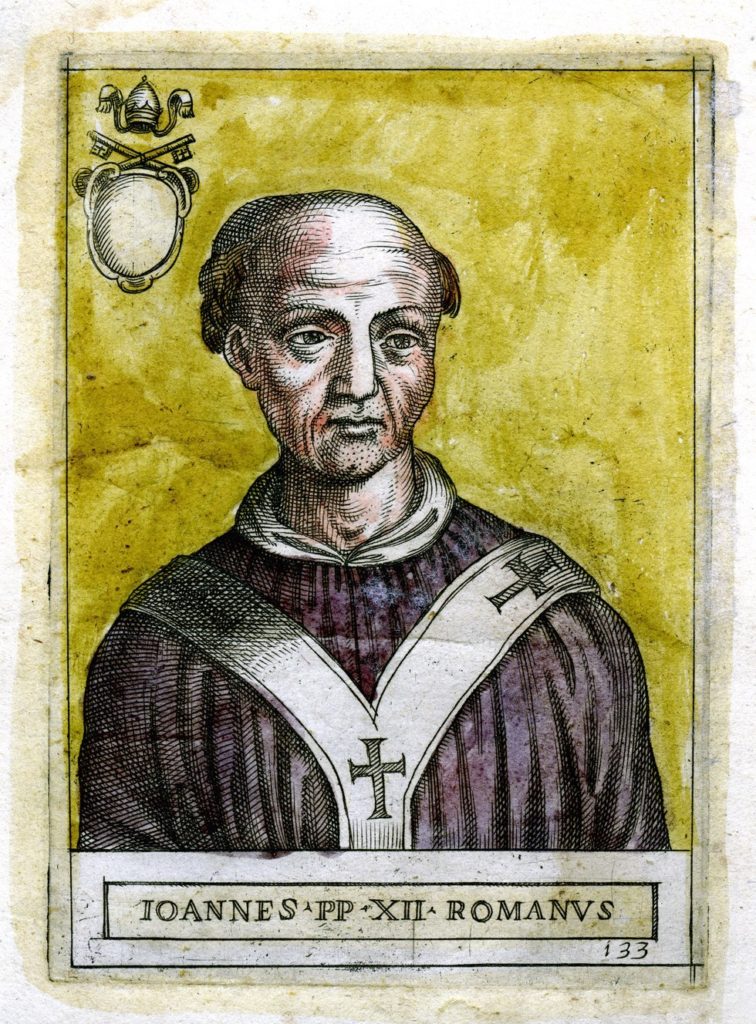
John XII.

Among the popes who lived in the Middle Ages, John XII was notoriously depraved. Pope John lived in the end of the 10th century. He did not at all correspond to the image that the Catholic Church wanted to show. However, his sexual insatiability did not offend priestly celibacy. Because it only came into force two centuries later. But at the sight of a series of incest, adultery, orgy, and murder, even his contemporaries accused him of making a considerable couplet of the Papal State.
Johannes XII., source: wikipedia.org
His family was already infamous. No one knows, for example, that his father's lover or his legal wife (who was his own stepdaughter anyway!) delivered him?  But his father had an affair with several other women in addition to his wife, who was raised by his foster daughter.
Despite his young age, he threw himself with great enthusiasm into the exercise of papal power. After his father, he also inherited the management of secular state affairs. Unfortunately, he was not talented in either area. His campaigns ended unsuccessfully, so he had to look for an ally.
He thought it would be Otto I, King of Germany, but they were embroiled in a severe war conflict. At one point, the Pope, along with the treasury, dissolved a wheel from Rome.
It was then that stories of the Pope's evil and depravity appeared. We should not think of the usual corruption! But instead of the obscene sexual morals that prevailed in the Pope's court. Rodrigo Borgia organized regular orgies, had sex with his father's lover, his own niece, and countless other women!
He didn't really try to disguise his passion for worldly pleasures. The Pope spent most of his time hunting, gambling, and drinking. It was not advisable for the people around him to upset him in any way, because he had thoughtlessly killed anyone. For example his confessor and a priest, also named John. But he was even fired before.
When he returned to Rome, he tortured his enemies. XII. Pope John died unexpectedly while he was having an adulterous sexual relationship with a woman. According to a popular version, the cuckold husband got the party on him, and he was done with it!

The Borgias

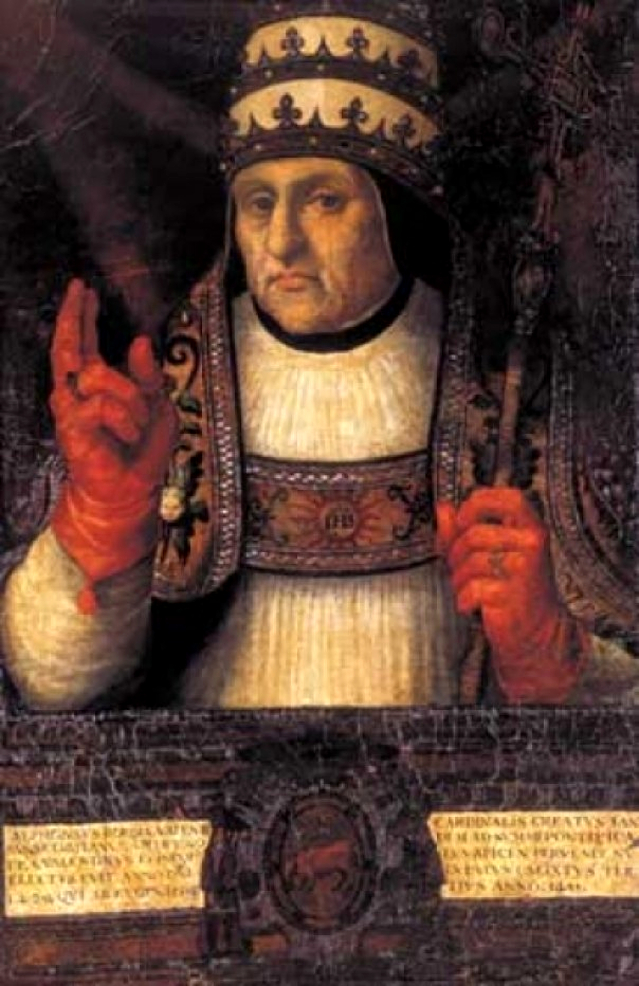
Alfonso Borgia - III. Callixtus

Of the members of the Spanish-born Borgia family, the first pope excelled not in sexual scandals but rather in corruption. So much so that Roman nobles were ousted from crucial offices. Callixtus entrusted all important and lucrative offices to his family and followers. During his reign, two Cardinals of Borgia could also take a seat in the Holy College. He appointed his nephew Rodrigo Borgia cardinal, at the age of bare twenty-five. And with it began the heyday of the lives of the Borgias.
Alfonso Borgia, source: wikipedia.org

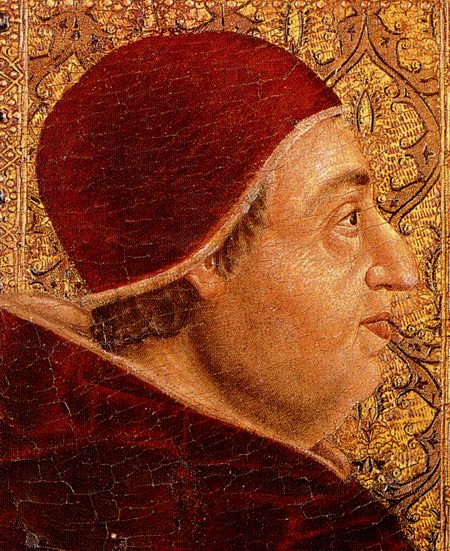
Rodrigo Borgia - VI. Alexander

Volumes have really been written about him then, but let's focus on his love and sex life. Rodrigo, who amassed a huge fortune, became Pope VI. Alexander, at the cost of serious bribes at the end of the century. He did not try to disguise his passion for the arts, as well as his sensual pleasures, as a true Renaissance man, living in his "attraction to Venus" all his life.
Rodrigo was known as a real handsome boy. He could get almost everyone in his environment, and he didn't want to give up sex just because of his cardinal title. Feasts were regular in Rodrigo's splendid palace. He also loved the card, excellent food, and drinks. Neither as a cardinal nor a pope did he lack the feminine charms and balls that seemed morally contagious.
Rodrigo Borgia, source: wikipedia.org
He openly planned to establish a papal dynasty that would govern the Ecclesiastical State. Even before he has ordained a priest, he had four children, including the later deservedly famous Cesare and Lucrezia. And he proudly took on all four children! His other children were also born from unknown concubines, with at least 8 descendants known in history.
His name was linked to countless sexual scandals. For example he and his daughter Lucrecia, were regular visitors to unbridled orgies. According to some opinions, he also had sex with her daughter. One of the orgies held in the Apostolic Palace. For chestnut banquets, not only VI. Alexander, but also Lucretia and Cesare, were official guests. At this event, about fifty prostitutes were ready to entertain the guests.

It is an interesting historical fact that the expansion and fertility of the Borgia family peaked just under a pope. As a pope, his political greatness was to place Rome on his side as soon as he ascended the throne. After that, also to strengthen the papal power, he also gave rank and dignity to his own children and side relatives, as well as to more distant acquaintances.

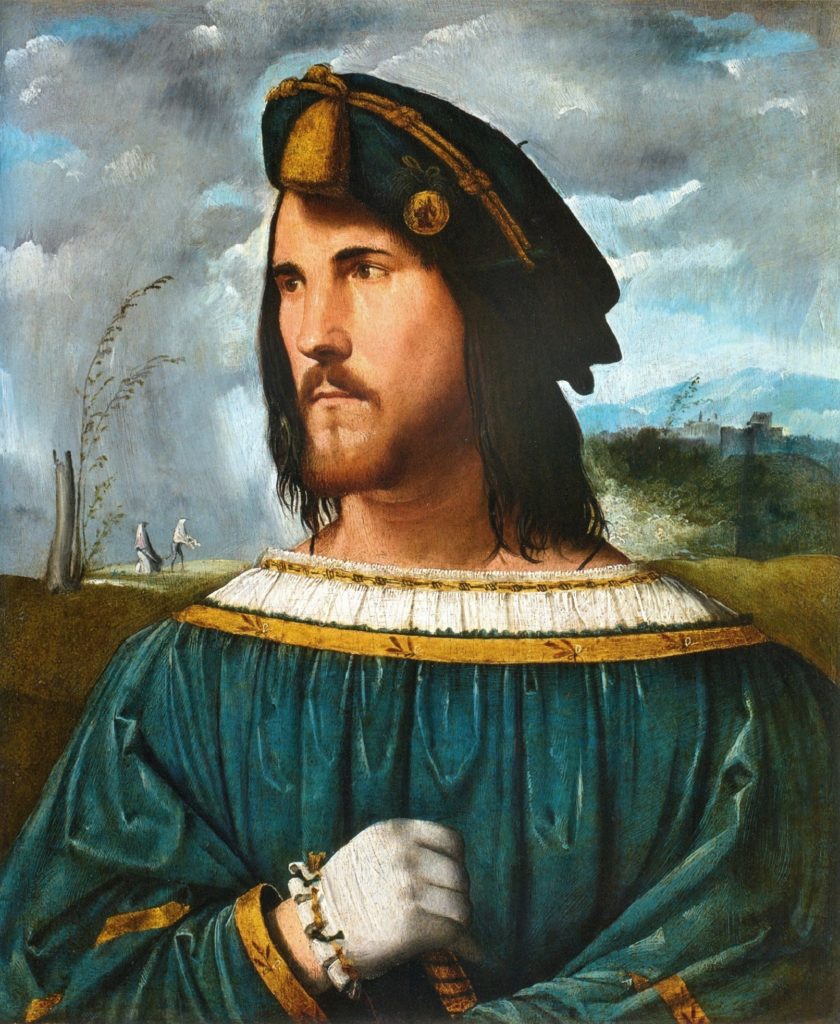
Cesare Borgia

His legal origins were declared by a papal bull as early as the age of five, and at the age of nine, he boasted dozens of ecclesiastical appointments. He was already an archbishop at the age of 15 and later studied law and theology. At the age of 18, his father appointed him a cardinal. He had a masculine and overwhelming appearance, and he could get any woman.
Cesare Borgia, source: wikipedia.org
He is also said to have murdered his brother, Giovanni, in 1497, but there is no tangible evidence of this. But it is characteristic of the Borgias that the brothers were lost at the mercy of their sister Lucretia. The bloodthirsty relationship, however, is more of an urban legend, but it may even be true! Consider that their father was the most scandalous Pope to this day and the orgies he has visited with his children.
When Cesare married a French princess, for the first time in history, he became the first cardinal who resigned. He died young at the age of 31 in a siege.

Lucretia Borgia

The history show her as the queen of poison mixers and the a fleshy woman. She received an outstanding upbringing in her young age. But when her fater's interests wished him to marry his daughter again and again. Three times.
Lucrezia Borgia remained in the memory of a bloodthirsty femme fatale who killed her bored lovers with a poison hidden in her ring. Victor Hugo's drama did a lot for this, but the Borgias series also took a long time to portray Cesare and Lucrezia's sibling. Yet this is not considered likely by researchers. Fact is that Alexander VI. based on a humiliating impotence test, separated her daughter from her first husband. The embarrassed husband retorted as Lucrezia slept with her father and brother.
Lucrezia Borgia, source: wikipedia.org
The image of her may also have been due to the fact that in this age, women were portrayed as dangerous, violent, rebellious, evil figures. Lucrezia's death was also typical at that age. She died ten days after the birth of her eighth child.

Although not all Borgia descendants were degraded, the era marked by their name was undoubtedly rich in murder, intrigue, corruption, and, last but not least, eroticism!

Read more about the eroticism in the Middle Ages!

2020. május 22., péntek

Temples dedicated to erotica


We have already mentioned in an earlier post about India and the Kama Sutra, the holy book of sex and love. Let’s now dwell on this topic again and some of the strange temples in India that have sex positions in the Kama Sutra. India has one of the few “age-restricted” parts of the world heritage, the Khajuraho temple group.

Khajuraho is a village in the Indian province of Madhya Pradesh, approx. 620 km southeast of Delhi, the capital of India. The churches here are approx. It was built in 100 years between 950 and 1050 AD. Of the original 80 Hindu temples, only 22 remain in their original condition. They are currently spread over a total of 21 km2. Hundreds of statues depict different positions of lovemaking on the walls of the church complex.
These temples have a spiral structure, adhering to the traditions of North India.

India has been extremely conservative for the past few hundred years: some of the Islamic dynasties, some of the British colonizers, and some of the priestly caste of the Hindu religion have had great but similar significance. But this was not always the case! Previously, in the 13th Century, sexual norms were much freer. It is quite astonishing to man today that sex was a school subject and we find engraved memories of this on the walls of the Khajuraho temple group.

At first glance, the superficial observer sees completely ordinary decorations on the walls of the temples. However, if we take a closer look at them, we can see that they are extremely erotic depictions: triple sex, orgies, homosexuality, good-bodied people satisfying each other in impossible poses while divine beings stare at them with a smile. Like a stone carved ancient hardcore porn movie! These engravings are in very good condition, compared to the fact that we are talking about temples more than a thousand years old.
Khajuraho, wikipedia.org

There are several ideas as to why this kind of representation was so popular. Some say that the members of the Chandela dynasty who built the church group were following tantric principles, and this is reflected back in the temples. Others say that the temples had a different role than they did now: they were also important places for learning, and therefore, of course, they also provided a place for learning to make love. It is also true that the depiction of sexual activities was quite simply a good omen, as it symbolized new beginnings, new lives. And there is also the spiritual explanation: in the loving relationship of the Supreme and human, the expression of love is only seemingly ordinary. The attraction of the Supreme and the pure human soul is free from all physical and material aspects. And this attraction is also depicted in the engravings of these temples.

2020. május 15., péntek

History of Sex, Erotica, and Pornography XI. - The Italian Renaissance and the Age of the Courtesans


In the 15th century Europe, erotic thoughts and deeds were believed to hinder one's redemption. The church and the morals agreed that sex was needed, but only to create offspring and populate cities, not for fun! Sex had its rules, such as that the "natural" position is when the man is over. If the couple faced each other lying side by side, that was an acceptable category. One of the most disgusting was when the woman was over. Only Sodom was judged better than this. It is, therefore, worth examining the social and cultural background that gave birth to the above rules.
For most Italians, the problem was homosexuality. As in ancient Athens, adult men played the active role, young boys the passive. A crucial moment in the transition was moving from one situation to another, and then when men were "adults," there was heterosexuality within marriage. However, if two adult men continued to have sex with each other, it suggested that this could not only be a temporary state. Still, it could also be permanent and dangerous to society. Hence the admiration of the young body, but the adult male has already lost its appeal.
To overcome male homosexuality, the larger cities - Florence, Venice, and Milan - encouraged female prostitution. But since the beginning of the 13th century, brothels have operated alongside markets to promote attraction and marriage to women. It was almost a civic duty to express a desire for a female body, the ultimate goal of which was procreation and thus the population of cities.
Venice in the 15. century
pinterest.com

A 15-16. century a new word appeared in Europe: the courtesan. The Italian names il cortegiano and the French le courtisan referred to people who were courtiers. The attractive women who appeared in their surroundings and were supported by them began to be referred to as courtesans. In the Renaissance, the courtesanwas sharply separated from ordinary prostitutes. The courtesans were wealthy and educated, able to talk about Petrarca's sonnets with equal expertise, singing beautifully, playing on the lyre, dancing, and being very versed in the art of love as well. That's why they cost a lot. They lived respectable lives and spent their days among the upper strata of society, aristocrats, wealthy merchants, and chief officials. They were clean, elegant, good lounges, or just neat businesswomen. They could play an instrument and sing, and they could entertain men.
The life of Veronica Franco (1546-1591) of Venice, who was also the lover of two Renaissance painters, Jacobo Tintoretto and Paolo Veronese, is well known - as it was also made into a film. She spoke in seven languages, played the flute, and wrote poems. She was a cortigiana onesta, meaning an educated and sophisticated prostitute. Even she also had an affair with  Henrik III., King of France (1574-1589).
Veroniva Franco
pinterest.com
Many courtesans became known by the name of their hometown, while others preferred names referring to power. It was widely believed that an educated courtesan was far more dangerous to young men than a cheap and poor prostitute because he sold his favors so dearly that he could ruin more young nobles.
Most cities have tried to persuade prostitutes to wear garments that differentiate them from decent women. There were cities where they had to wear a red cap with small bells, elsewhere they had to wear a black cloak, and in Rome, they were forced to veil their faces. And they didn't need better marketing. Their appearance immediately betrayed their occupation, and the potential knew they didn't have to run unnecessary laps.
Tintoretto
wikipedia.org
The first Renaissance erotic literary work appeared at about the same time as Giorgone painted his Venus. 
the sleeping Venus
wikimedia.org
At the beginning of the 16th century, Giuliano Romano made a series on various sexual postures: he depicted the most forbidden, i.e., women are at the top of the pictures and men penetrate their women from behind. Interestingly, however, it was not the drawings that were the problem, but the fact that they were widely distributed. They were also confiscated and destroyed by papal order.
Duality related to sexuality was characteristic in several areas. For example, while patrician families kept the innocence of their girls, the boys may have been taken to the local brothel by the heads of families themselves to learn from experts what to do on their wedding night. Another interesting fact is that the secular authorities made every effort to regulate prostitution, year after year, in more and more regulations. At the same time, the city authorities were motivated to keep the brothels alive and profitable, because the owners of the brothels were required to pay one-eighth of their income as tax.
Thanks to this dual attitude, then, prostitution flourished in Renaissance Italy. This practically meant that there was at least one brothel in every city and more in the larger cities. It is said that in 1468 there were more than 200 such institutions in Venice, and a tenth of the inhabitants of the town were prostitutes!
For brothels, a few streets were set aside in most cities. But in Rome, for example, they had a whole quarter of the city at their disposal. Whoever gave himself up a bit worked in the brothel. The brothels were two-story houses with an inn at the bottom where you could eat, drink, dance, meet ladies. The store was tied downstairs. The action took place upstairs, where it was separated by planks and curtains in rooms. Most of the ladies working in Italian brothels were blonde Germanic and Slavic girls who were found particularly attractive by local men.

2020. május 13., szerda

The story of Sex, Erotica, and Pornography X. - the Middle Ages 2.

Read about the Middle Ages here!
 Troubadours and brothels
Everyone in the medieval literature knows the troubadour songs, in which a knight begs the beloved lady in bile. Still, there was no chance that the relationship would become a reality.
a troubadour
thehighwindow.com

Troubadour poetry in the XII. started from the southern French nobility of the 16th century. His main feature was that the poet always writes his songs to a married woman. The point was that the husband himself was not fit for love: he could not love his wife, could not bile for him, could not court him. The main reason for this is that in the Middle Ages, marriage between nobles was a simple property transaction arranged by the parents, the young people to be married had no say in it: money married with money, land with land, and so on. Emotions played no role. Also, the purpose of marriage is to birth, a child who has inherited the family property. So the husband cannot feel anxiety and torment, which is one of the essential components of troubadour love. The chief virtue of knights in troubadour love is patient humility, with which he endures the torment of a woman adored from afar.
The ideal lover
A true hero-loving knight is humble, kind, attentive, making sure everyone has a good opinion of him. The knight avoids profanity and rudeness. The ideal lover can earn the mercy of his lady if he patiently bears the spiritual pains. The essence of this love is the constant threat and uncertainty, where suffering and true love belong together. The troubadours even compete with each other to see who suffers better. A true lover is very discreet, and he would never reveal where his love affairs are. According to the troubadour songs, the lady may have rewarded her persistent knight. But what that was, the knights did not reveal much about, because, as we know, they were discreet. One possible reward might have been the sight of the beloved woman’s naked body, and the other was a kind of love test that we could best describe today with the word petting. The lady allowed the man to lie next to her after promising that she would behave following the requirements of moderation.

a knight
glogster.com
Moral superiority
A XII. It was an everyday reality in 19th-century France that in noble families, the firstborn son inherited the property, and the other boys were either given to a priest or served in a nearby castle lord and remained wealthless. That’s why they couldn’t even think of marriage. So they needed something in which they could be more than and rich above the wealthy knights — at least morally. And that was pure, Platonic love. However, he formulated the sexual overheating of knights in literary form. It also drew a sharp line between nobles and citizens and peasants who mated in the “animal way.”
Marriage as a sacrament
However, based on many literary works - Boccaccio, Villon, Chaucer - it can be thought that the whole of society was obsessed with sexuality.
Boccaccio
imdb.com

A XII. century, the church made marriage a sacrament, and sex between spouses served to create the blessing of children. Everything else was considered sinful fornication. If the woman did not give birth to a son, the husband often confused her: she gave her to a convent, “proved” infidelity, adultery, or found out a “kinship” she had not yet guessed at the time of the marriage. However, if the wife had indeed cheated on her husband, many medieval customs were awaiting her death - unless the husband himself had done so before.
Brothels, baths, and rape
The poor and unmarried knights found relief in brothels. Despite early medieval prohibitions and severe punishments, prostitution was introduced in the XI-XII. Century lived its heyday. Organized prostitution has been recognized as the strongest guardian of marriage because it protects married women from the seduction of unmarried men and provides young men with an opportunity “without consequences.” The importance of brothels was even acknowledged by St. Thomas Aquinas as a necessary evil.
There were brothels in every city where, according to their social rank, budget, and taste, everyone found the woman they liked. There were brothels for the ordinary people, and especially for the gentlemen, which could be used with certain moral and hygienic rules (prayer three times a day, ban on the admission of virgins and married women). Prostitutes over the age of 30, mostly married and often became respected mothers and virtuous matrons.
The brothel accessories were complemented by the medieval bathhouses, where nudity was allowed, and the bath girls were happy to fulfill all the wishes of the guests. An XVI. however, from the 16th century onwards, the church increasingly complained that men and women, honorable women, and prostitutes bathed together so that the bathhouses were soon closed.
Rape was a usual custom in the eyes of medieval youth. Every second young urban man took part in such action at least once in his life at the age of 16-26. Most of the violence took place in public. The authorities did not punish their activities either, because young people often singled out their victims in the role of “moral beaker”: women who were already in bad news: priest lovers, widows, adulterous women, foreign female visitors. The violence was often introduced by cat music held under the victim’s widow. Then a team of 4-15 people broke into the house and raped by the whole company, accompanied by harsh punches and loud whips - it was a peculiar medieval ‘gangbang'.